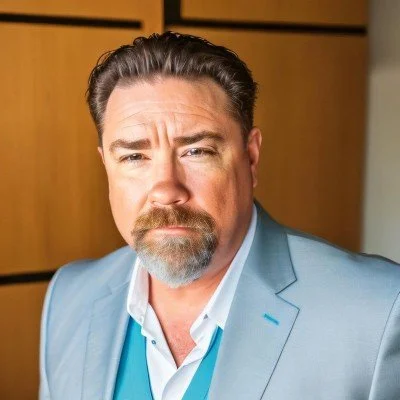
Health insurance is one of the biggest checks a growing contractor writes. Every year the renewal comes in higher, and every year most owners sign it. Harlon Pickett, President of Eagle Care Health Solutions in Houston, thinks that is the wrong move. He has worked in health insurance since 2007, and he now builds custom health plans for businesses and individuals.
On Driven To Win episode 433, Harlon sat down with Chaz Wolfe to explain why owners pay so much, where the money goes, and what you can do about it. Here is what a construction, trades or home service owner should take from that conversation.
Why does health insurance cost a small business so much?
Because most owners never question the plan, the price or the person selling it. Harlon says that once a company passes 50 employees, the law requires it to offer insurance. From there it quickly becomes, in his words, "your second to third largest profit and loss item."
The bigger problem is what you get for that money. Harlon puts it plainly: "you're paying for something right now that most of your employees are not even using." And the people who do use it are often unhappy with it. Many owners feel the same way, but they believe there is no way to control the cost.
For a contractor running on thin margins, a cost that size deserves the same attention as materials, fuel or labor.
Who should make the health benefits decision in your company?
You should. In many small companies, the owner hands health benefits to HR or the office manager and only looks at the total. Harlon calls that a mistake. He told Chaz that owners are "leaving it to the HR department to make strategic decisions, money decisions that should be in your hands."
Your office team can run enrollment. But the choice of how to structure one of your top three expenses is an owner decision. Put it on your calendar the same way you would a big equipment purchase.
Is a smaller rate increase really a win?
No. Harlon tells a story every owner has heard. The broker says rates are going up 15 percent. Then he comes back and says he fought for you and got it down to 12. The owner thanks him and signs.
Later in the episode, Harlon comes back to that same broker. "He only got a 12% raise," he says. A smaller increase is still an increase. If your renewal goes up every year and your broker always says nothing can be done, that is a sign to look at other options, not a reason to say thank you.
Why do prices for the same care vary so much?
Because one procedure can carry hundreds of prices. Harlon explains that each hospital has a book of list prices. Then each insurance company has its own rate, and each plan inside that company has its own rate too. The exact same procedure, he says, can have hundreds of different price points. The cash price is usually at or near the bottom.
Chaz shared his own family's story. A hospital bill that started at $40,000 came down to a little over $3,000 because they paid cash. Harlon explained why any business owner would understand that. Cash today, with no billing fight, costs less to collect than a claim paid months later.
Billing is a big part of the cost. Harlon says someone in the hospital world told him a hospital typically has five billing people for every bed. And he made the point that should stop every owner: "there's no correlation between the level of care and the cost of the care." Paying more does not mean your crew gets better care.
What is the difference between health insurance and healthcare?
Health insurance is a way to pay for care. Healthcare is the care itself. Harlon says most Americans treat the two as the same thing. He told Chaz that "health insurance and healthcare are two different things." He even notes that you cannot buy healthcare on healthcare.gov. You can only buy insurance there.
That matters because a card in your wallet does not promise that a claim will be paid. Harlon points out that insurance is legally "the sharing of risk," not a guarantee. Once you see that, you can start asking what your team actually needs, instead of only which carrier to pick.
How can an owner lower health insurance costs without cutting care?
Start by asking what you want the plan to do. Harlon says most brokers only ask which carrier you want or what deductible. He starts with a different question: "What do you want your plan to look like?"
From there, he builds plans from a mix of options. These can include:
Direct primary care, a membership model where a doctor charges a monthly fee, which Harlon puts at about 50 to 120 dollars, and you can see that doctor at no extra cost.
Medical cost sharing, where members share large medical bills.
Care navigation, where employees get an advocate who guides them to the right doctor or facility.
Centers of excellence, highly rated surgery centers and specialists your plan steers people toward.
Harlon says the goal is to take "the high dollar middlemen out" and give people direct access to care. He also stresses that the plan has to stay compliant. For companies with 50 or more employees, the fines for getting it wrong can be large. Do not change your plan without an advisor who handles the legal side.
How do you know whose side your broker is on?
Ask how they get paid. Harlon spent years as a traditional broker, so he knows the model. Most brokers are paid by the insurance company, and sometimes by others in the chain. The owner hears that the service is free. Harlon asks a simple question about that: "If I'm being paid by the insurance company and everybody else, which side of the table am I sitting on?"
Harlon now works on a different model. He is paid only by the employer, on a fee he discloses in full. He also asks each client to name a "healthcare champion" inside the company, so someone on your team watches how the plan works week to week. You do not have to use his model. But you should know exactly how your advisor is paid before you trust their advice.
Can a better health plan help you hire and keep good people?
Yes. Contractors fight for good people every day. A plan your crew actually likes and uses is a real edge. Harlon's challenge to owners: "imagine a healthcare plan that's so good, it's drawing people to your company. People want to come work for you."
For the national picture on what employers and workers pay for coverage, see the KFF 2026 Employer Health Benefits Survey. Then compare it to your own renewal.
What should you do this week?
Pull your last three renewals and write down what you paid each year. Ask your broker in writing how they are paid. Then ask your team what they actually use and what frustrates them about the current plan. That gives you real numbers to bring to any conversation about a different plan.
If health benefits are one of many decisions still sitting on your desk, the workbooks on our Books and Tools page help owners find where their time and money really go.
Listen to the full conversation on Driven To Win episode 433 with Harlon Pickett.
This article was written by the Gathering The Kings team from Driven To Win episode 433 with Harlon Pickett.