A lot of contractors believe the fix for a tight year is more work. More leads, more jobs, more crews. Then the year ends bigger and the bank account looks about the same. Growth did not fix the profit problem. It made it bigger.
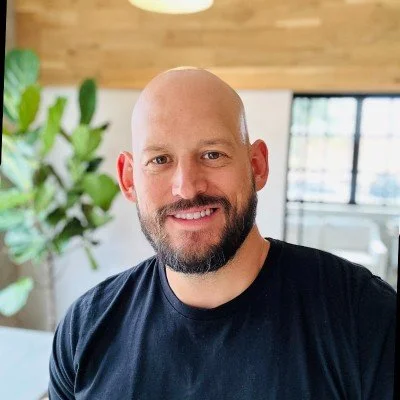
Colin Sanburg, founder of FinElevate, helps owners fix that. He ran a small manufacturing company as CEO for almost 15 years and came up through the finance seat. On Driven To Win episode 443 he told Chaz Wolfe how owners can make their companies more profitable, often in a few months. Here is what a construction, trades or home service owner can take from that conversation.
Why doesn't growth make my contracting business more profitable?
Because growth exposes every leak you already have. Colin says one of the most common misconceptions is that growing fast means you will make far more money.
He compares a fast growing company to a boat with a thousand little holes in it. At a smaller size you can plug every leak yourself. As the company grows, the holes multiply faster than you can find them. A job priced a little thin, a truck that sits, a crew that waits on materials. Each one is small. Together they eat the profit that the extra work was supposed to bring.
So the first step is not more sales. It is finding where the money leaks out before you pour more in.
Should a contractor charge premium prices?
Yes. Colin is direct about it: "if you don't know how to justify premium pricing," you are doing it wrong. He calls it a statement he can make across industries.
His reason is simple. Low prices may make a job easier to sell. But "once you sell that work you have to turn around and service it." A cheap job takes the same crew, the same trucks and the same hours as a well priced one. You just keep less of what it brings in.
Trying to win on price is, in his words, "a race to the bottom." Most contractors do not have the size of a national chain. They cannot win by being the cheapest, and they should not try.
What do premium prices actually pay for?
They pay for the things that make your company worth hiring. Colin puts it this way: "it's the money that comes from your pricing that you reinvest in your team." That money also builds a better product, steady profits and cash in the bank for the next stage of growth.
He also points out what a small business is really selling. "We're selling experience. We're selling customer service." Customers hire you because you care more than the next company. And he is clear: "you can't do that on the cheap."
That does not mean pricing without limits. His advice is to be thoughtful, not crazy. Price for the experience you deliver, and then deliver it every time.
Which numbers should an owner watch to protect profit?
Start with your profit and loss statement, and turn each line into a percentage of revenue. Most owners know their gross margin. Fewer tie the rest of the costs back to revenue the same way.
Colin groups the big buckets: cost of goods, labor, sales and marketing, and overhead. Then he gives each one a rough target. For labor, his example is this: "if I keep labor at 30% or less of revenue I'm golden." The right number changes by trade. The point is to have one, and to know your target profit percentage too.
Once those targets exist, hard decisions get easier. When revenue drops, owners often defend the team they already have. Colin's advice is to "tie it back to data" and "don't make it about people." He still cares about the team. He just wants the numbers to make the call, not your feelings on a bad week.
The Small Business Administration's guide to managing your business finances is a good primer if financial statements are new to you.
When does running off the bank balance stop working?
Usually somewhere between half a million and a million dollars in revenue. Below that, many owners get away with checking the bank balance and asking if they are okay.
Past that point, Colin says, complexity kicks in. If you do not understand the finance side, other people end up making those calls for you. "Now they're making financial decisions on your behalf."
The good news is that you do not have to become an accountant. Colin says "you don't have to become Warren Buffett." Learn the basics, then lean on a trusted CPA or finance partner for the rest.
How can an owner test the business without a finance team?
Run a few what-if scenarios. Colin says you can do it "on a simple spreadsheet," "on the back of a napkin," and "in 15 minutes."
Pull up your profit and loss statement and group it into those big buckets. Then ask a few questions. What happens if revenue drops 30 percent? What happens if it doubles? Which costs are fixed, like rent, and which rise and fall with the work? How do you do twice the revenue out of the same rent?
Fixed costs are where profit hides. When revenue climbs and fixed costs stay flat, more of each new dollar lands on the bottom line. When revenue falls, those same costs hurt fast. Knowing that ahead of time lets you plan instead of panic.
He also suggests one common unit of measure the whole team understands. For a contractor that might be jobs completed, squares installed or service calls run. Keep it simple and start with two or three numbers at most.
How fast can an owner turn profit around?
Faster than most expect. Colin says owners can be on a very different path in 90 days or less, if they are willing to make the tough calls.
His own regret is about speed. His first turnaround took 10 years. Looking back, he says "the big sacrifice was the time I lost by not making those decisions quicker." His advice to owners: "trust your gut with what's not working and act faster."
Where should an owner start this week?
Start with one hour and your last profit and loss statement. Here are three steps.
Turn every line of your profit and loss statement into a percentage of revenue. Set a rough target for labor, overhead and profit.
Look at your last five jobs. Find the one priced too thin and decide what you will charge next time.
Run two scenarios on paper: revenue down 30 percent and revenue doubled. Note which costs stay fixed.
If you want tools to see where your time and money go, start with the free workbooks on our Gathering The Kings tools page. To hear the full conversation, listen to Driven To Win episode 443 with Colin Sanburg.
This article was written by the Gathering The Kings team from Driven To Win episode 443 with Colin Sanburg.